
3-tonne drop-side
3 ton pickup for rent in Dubai
An open drop-side bed rated to carry 3,000 kg — the vehicle most people in the UAE mean when they say a 3 ton pickup. Loaded over the side, dropped straight off the back, and big enough for the jobs a 1-tonne cannot finish in one run.
3,000 kg payload
Open drop-side bed
Heavy licence, or our driver
Free delivery in Dubai
Photographs
The actual 3-tonne drop-side
These are pictures of our own drop-side rather than a manufacturer’s render. The ones worth studying show the bed with its sides down, because on this vehicle the booking turns on whether your load can go on from the side or the back, and how much of the bed it will take up.
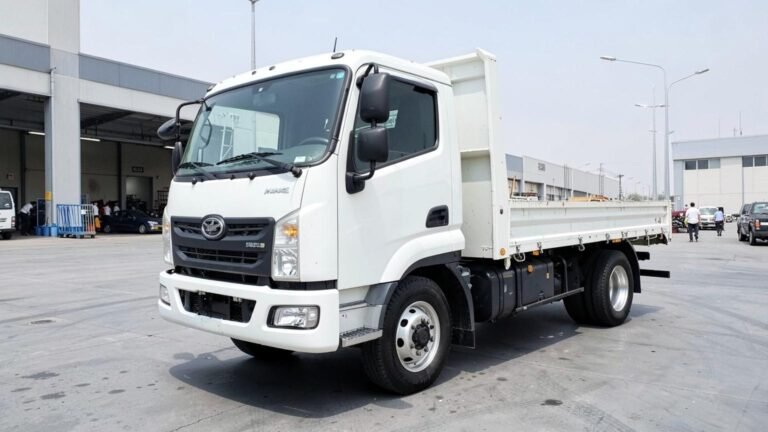
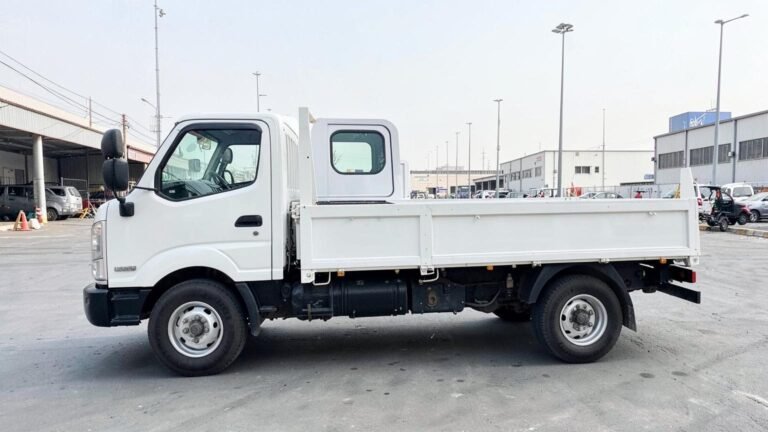
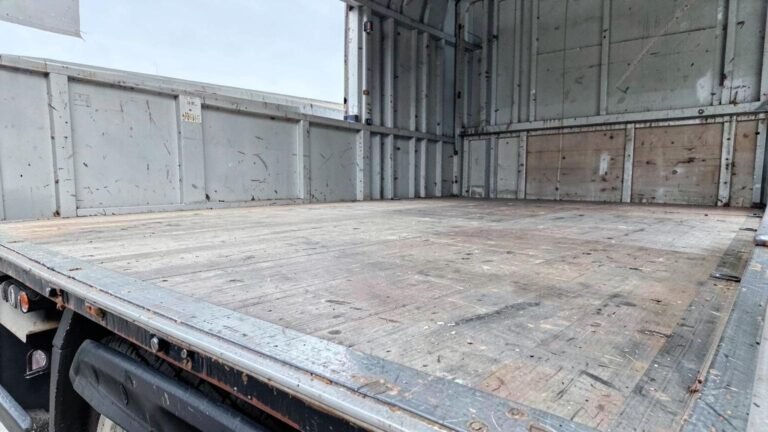
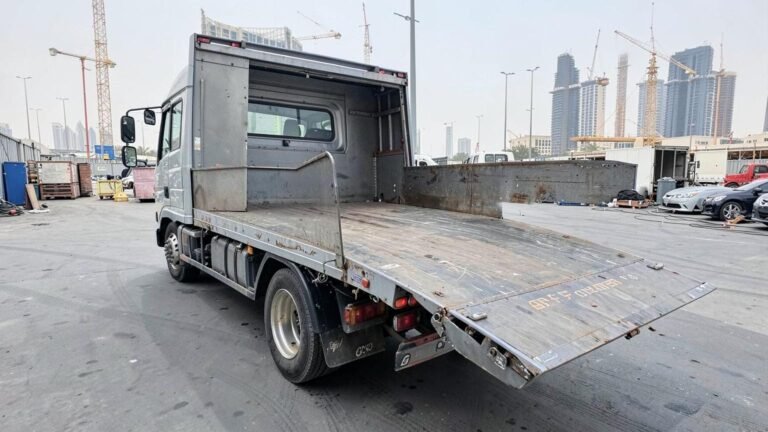
The work
What a 3 ton pickup is actually for
The open bed is the point. If the load needs covering, this is the wrong vehicle and a box body is the right one.
Building materials at volume
Sand, aggregate, cement, blocks, tiles, timber. Three tonnes is where a load stops being two trips in a 1-tonne and becomes one trip. Weight runs out long before space does on this vehicle — check the tonnage, not the floor.
Site clearance and scrap
Rubble, offcuts, stripped fittings, metal. The drop sides come down on both flanks and the back, so a loader or four hands can work the whole length rather than posting everything through one opening.
Plant and equipment
Small machinery, compressors, generators, scaffold towers. Anything that has to be craned or rolled on rather than lifted through a door.
Landscaping and pools
Soil, gravel, plants, pavers, pool kit. Loads that are heavy, dirty and awkward, and that nobody wants inside a closed van.
Before you book
The licence is the real constraint
This catches more bookings than price does, and the name of the vehicle actively misleads people.
The “3 ton” in a 3 ton pickup is the payload — what it carries. The vehicle itself is rated far higher, commonly around 6,000 to 6,500 kg gross. So it does not sit just under the three-tonne licence line; it is roughly double it, and a standard UAE light vehicle licence does not cover it.
Two ways round that. Put a driver on it who holds the matching heavy category, or take the vehicle with one of our drivers and the licence stops being your problem. The full explanation of where the line falls is in the licence guide, and the naming itself is unpicked in what a 3 ton pickup actually means.
If the driver you had in mind holds a car licence only, the 1-tonne pickup is the one they can legally drive.
Payload, and the licence that comes with it
1-Ton Pickup Car licence
3-Tonne Drop-Side Heavy licence
3-Ton Chiller Van Usually heavy
5-Tonne Truck Heavy licence
10-Tonne Truck Heavy licence
The step from the 1-tonne to the 3-tonne triples what the vehicle carries, and it is the same step at which the licence changes. Everything from the drop-side upwards needs a driver holding the matching heavy category, or one of ours at AED 250 a day.
The sizes
The 3-tonne against what sits either side of it
Three tonnes of payload is the same in the drop-side and the chiller van. What differs is whether the load is open to the sky or closed and cold.
| Vehicle | Body | Length | Payload | Licence | From |
|---|---|---|---|---|---|
| 1-Ton Pickup | Open drop-side | 2.3 m bed | 1,000 kg | Car licence | AED 150 / day |
| 3-Tonne Drop-Side | Open drop-side | On request | 3,000 kg | Heavy | On request |
| 3-Ton Chiller Van | Enclosed, refrigerated | 4.2 m body | 3,000 kg | Usually heavy | AED 380 / day |
| 5-Tonne Truck | Enclosed box | 5.2 m body | 5,000 kg | Heavy | AED 500 / day |
Two figures on that row are deliberately left as on request. The bed length varies because these bodies are fabricated onto the chassis to order — two trucks both honestly called 3 ton pickups can differ by half a metre of usable bed, so we quote the measurements of the actual vehicle rather than a category average. The rate we confirm with availability, because it moves with hire length and route. Ask and you get both in the same message.
Getting a quote
What to send so the quote is right first time
Because the rate and the bed size are confirmed per vehicle, the quality of the quote depends on what we are told. Six details cover it.
The material and its weight. “Blocks” is not enough; “two pallets of hollow blocks, about 2,400 kg on the supplier’s note” is. Weight is the limit on this vehicle long before space is, so a number from the supplier is worth more than any description.
The longest item. Timber, pipe and steel sections decide whether the bed on the vehicle that is free is long enough, and because these bodies are built to order that is a question about a specific truck rather than a category.
Both ends of the journey. The loading point and the delivery point, with a pin if the site has no proper address. Sites on the edge of the city often do not, and a driver searching for an unmarked gate is time on the clock.
How it will be loaded and unloaded. Forklift, crane, or hands. That tells us whether the sides need to come down at the site, and whether the vehicle needs to stand anywhere in particular for the equipment to reach it.
The dates and the hours. Many sites and communities restrict delivery times, and a day that has to finish by three is a different booking from one that can run late.
Whether you need our driver. Most customers do, because of the licence. If you have your own heavy-licence driver, send their licence with the booking so it can be checked before the day rather than at handover.
On site
What a site has to offer a loaded 3-tonne
A 3-tonne drop-side is a heavy vehicle once it is loaded, and not every site is ready for one. These are the checks worth doing before the truck arrives.
Ground first. Paved roads and compacted site tracks are fine. Soft sand, freshly backfilled trenches and wet ground after irrigation are not, and a loaded truck that sinks to its axles on a plot at the edge of the city can take hours to recover. If the delivery point is on unmade ground, say so, and ask the site whether there is a firmer place to stand.
Space second. The truck needs room to turn and, usually, to reverse in. A banksman guiding it back is standard practice on any busy site and worth arranging in advance rather than borrowing whoever happens to be nearby.
Overhead third. Low cables, scaffolding, tree branches and site canopies all matter when the load is tall or when a crane or forklift is working above the bed. Check the route from the gate to the unloading point, not just the unloading point itself.
Rules last. Villa communities and some developments restrict heavy vehicles by weight, by time of day or by route through the community. The site manager or the community office will know, and it is far better to find out from them than from a security guard at the barrier.
If any of these are uncertain, a photo of the access and the unloading point answers most of them. We would rather look at a picture before the day than send a truck that cannot get in.
Loading
Forklifts, cranes and where the weight sits
An open bed can be loaded from almost any direction. Where the load ends up on the bed matters as much as how much of it there is.
Drop-sides make forklift loading straightforward: sides down, pallets placed from the side, sides back up. The placement is the part that matters. Heavy pallets belong over and just ahead of the rear axle, spread across the width, rather than stacked at the tail or piled at one side.
Avoid point loads. A single very heavy item on a small footprint, a compressor or a stack of steel plate, concentrates weight on a small area of the bed. Timber bearers underneath spread it, protect the bed and make the item easier to strap and to lift off later.
If the load needs a crane at either end, confirm before booking who provides the lift at each site. Many suppliers have one at the yard; far fewer delivery sites do, and a load that was craned on with nothing to crane it off is a problem that arrives with the truck.
Once loaded, secure it before the sides go up rather than relying on the sides. The drop-sides define the bed; they are not designed to hold a shifting load in place under braking, and straps through the tie points do that job.
Keep the total honest. The payload is 3,000 kg including anything else on board, and a load that is close to the limit on the supplier’s paperwork is often over it once pallets, bearers and packaging are counted.
Multi-drop
Delivering to several sites in one run
Contractors often use a 3-tonne to supply several sites from one merchant run. That works well with a little planning.
Load in reverse order of delivery, with the first drop at the side or the tail where it can be reached without moving anything else. On an open bed that is easier than in a box body, but a pallet trapped behind two others still costs time at every stop.
Re-secure after each drop. Every time part of the load comes off, the straps that held it are slack and whatever remains can move. It takes a minute to re-tension them and it is the step most often skipped on a busy morning.
Watch the balance as the load lightens. Taking the front pallets off first can leave the remaining weight concentrated at the tail, which lightens the steering. Where you can, take the drops in an order that keeps what remains reasonably central over the axles.
Plan the route around the heaviest drop. A truck at its full payload is slower through junctions and roundabouts and takes longer to stop, so getting the biggest delivery done early makes the rest of the run easier on the vehicle and the driver.
Send the list of sites and what goes to each, and we will say whether it is one run or two, and whether a 5-tonne would be the better vehicle for the volume.
3 ton pickup questions
What is a 3 ton pickup?
An open drop-side truck rated to carry about 3,000 kg. In the UAE the tonnage in the name is the payload, not the weight of the vehicle — there is a fuller explanation in this guide.
How much is a 3 ton pickup for rent in Dubai?
We quote it with availability rather than publishing a flat figure, because the rate moves with how long you need it and where it runs. Send the dates and the route and you will have a price back shortly. For reference, the 1-tonne starts at AED 150 a day and the 5-tonne at AED 500.
What are the bed dimensions?
Ask us for the specific vehicle. The body is built onto the chassis to order, commonly quoted as 14 ft or 16 ft, and the category name will not tell you which one you are getting.
Can I drive it on a car licence?
No. It is built to carry three tonnes, past the two tonnes a car licence allows, so it needs the matching heavy category. If nobody on your team holds one, take it with our driver or drop to the 1-tonne pickup.
Is a 3 ton pickup the same as a 3 ton truck?
People use both names for it. Pickup usually signals the open drop-side bed; truck gets used more loosely and can mean a closed box. If it matters to your load, say which you need.
Do you deliver it outside Dubai?
Delivery inside Dubai is included in the rate. Outside Dubai we quote by route — we run regularly to Sharjah and Abu Dhabi.
What if the load needs covering?
Then the drop-side is the wrong vehicle. A 5-tonne box keeps the same kind of load dry and locked, and the 3-tonne chiller van carries the identical 3,000 kg in an enclosed refrigerated body.
Reserve a 3 ton pickup
Tell us the material, the weight and the dates. We will confirm the vehicle that is free, its bed measurements and the rate before you commit.