
Fleet · Open bed
1-Ton pickup rental in Dubai
For everything that will never go through a rear door. Sand, timber, tiles, scaffolding, garden waste and site clearance — loaded over the side, dropped straight off the back.
From AED 150 per day
1,000 kg payload
Drop-side tailgate
Free delivery in Dubai
Photographs
The actual 1-Ton Pickup
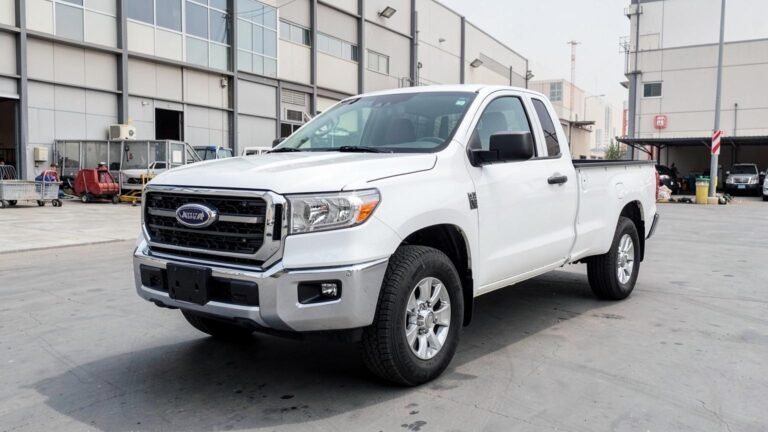
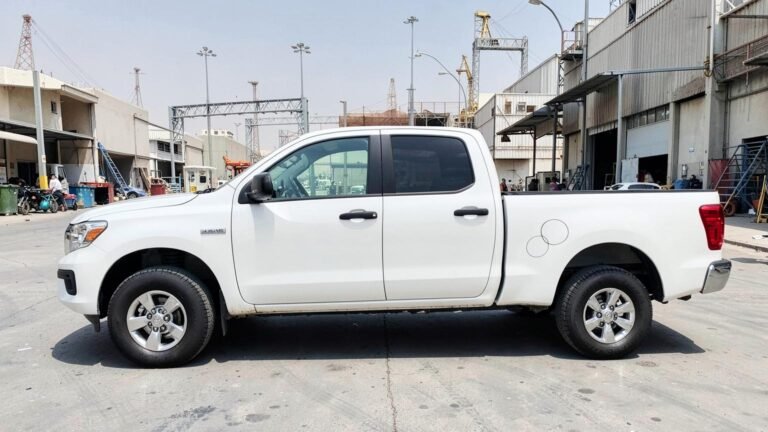
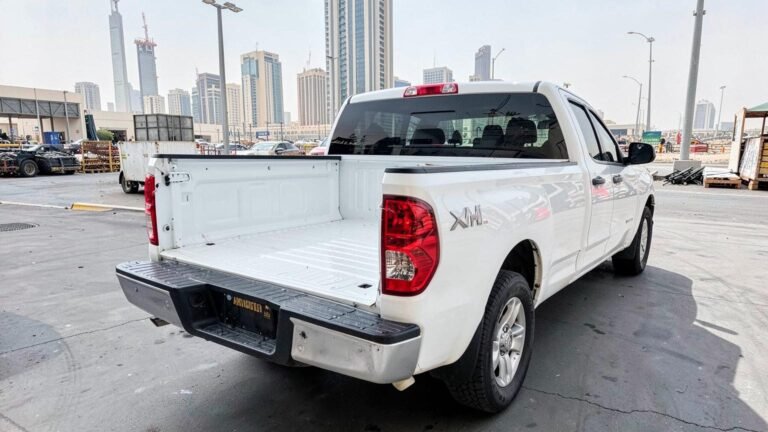
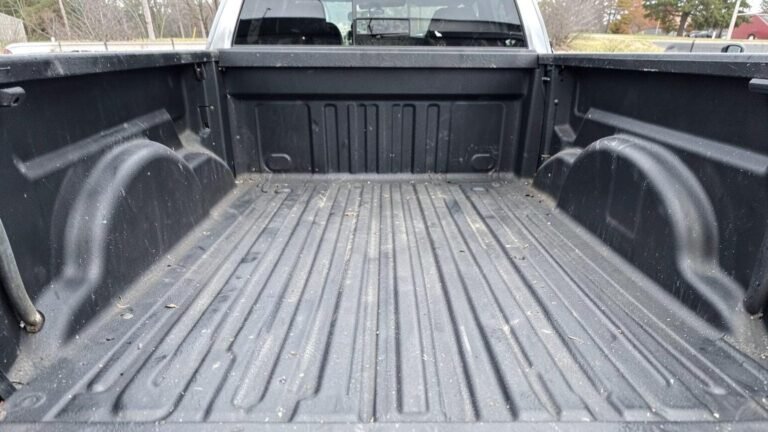
Our own 1-ton pickup at the yard. The photograph with the tailboard down is the one to study, because the bed, the side height and the way the tailboard folds decide what can be loaded and from which direction.
Dimensions
Drawn to scale
The bed drawn to the same scale as the rest of the fleet. The figure that surprises people is the side height: 0.45 m is enough to hold sand in, and nowhere near enough to stop a tall load from needing straps.
- 2.3 mload length
- 0.45 mside height
- 1,000 kgpayload
Specification
Bed size and payload
The load is open, so height is not the limit — weight is. One tonne goes a lot less far in sand or tiles than it does in timber, so tell us the material and we will tell you whether it is one trip or two. If the answer is two, the 3 ton pickup does it in one.
| Bed length | 2.3 m |
| Bed width | 1.5 m |
| Side height | 0.45 m |
| Payload | 1,000 kg |
| Seats | 2 |
| Engine | 2.4L petrol |
| Transmission | Manual |
| Tailgate | Drop-down rear |
The tonne
What one tonne is, in the materials people actually carry
The bed holds about 1.55 cubic metres to the top of its sides. Whether that matters depends entirely on what you are loading, because dense material reaches 1,000 kg long before it reaches the sides.
Dry sand weighs roughly 1,600 kg for every cubic metre, so a tonne of it is about 0.6 m³ — a layer some 18 cm deep across the whole bed, less than half way up the sides. Wet sand is heavier still and gets there sooner. Gravel behaves much the same. If the bed is level-full of either, the pickup is overloaded, whatever it looks like.
Twenty 50 kg bags of cement are a tonne, and they occupy a small stack at the front of the bed. A pallet of ceramic floor tiles is often close to a tonne on its own, which makes it a single-pallet job. Water is the simplest of all: a thousand litres is a thousand kilograms.
Timber is the opposite case. Softwood runs around 500 kg a cubic metre, so a tonne of it is about two cubic metres, more than the bed holds to the top of the sides. The same is true of garden waste, insulation, empty pallets and most site clearance: you run out of space, and the weight never becomes the problem.
So the useful question when you book is not how big the load is but what it is made of. Tell us the material and roughly how much, and we will say whether it is one trip in the 1-tonne or a job for the 3 ton pickup.
Loading
Loading and sheeting an open bed
An open bed is the easiest vehicle in the fleet to load and the easiest to get wrong, because nothing is holding the load in except you.
Put the weight over the rear axle and against the headboard, not out at the tailboard. A load stacked at the back lifts weight off the front wheels, and on a short vehicle that is felt immediately in the steering. Spread heavy material across the full width rather than piling it on one side.
Loose material goes below the line of the sides, never proud of them. Anything above that line will come out on a roundabout, and 0.45 m of steel is not a containment system for gravel at 80 km/h. Sheet the whole bed with a tarpaulin or a fine net, tie it at every anchor point, and check the tension again after the first few kilometres, because loads settle.
Long items are the other trap. Timber, pipe and scaffolding that overhang the tailboard have to be flagged and secured to the bed rather than simply resting on it, and a load that slides forward under braking is as dangerous as one that slides off the back. We carry straps and a net; ask for them when you book rather than buying rope on the way to the merchant.
Under UAE traffic rules an unsecured or uncovered load is the driver’s offence, and anything that falls onto the road is the driver’s responsibility. That is the reason for all of the above, quite apart from losing half a load of sand on Sheikh Zayed Road.
Rates
Pickup hire rates
In AED, including comprehensive insurance, registration and maintenance. Fuel, Salik, fines and 5% VAT are charged separately.
| Term | Rate | Mileage included |
|---|---|---|
| Per day | AED 150 | 150 km per day |
| Per week | AED 900 | 1,000 km per week |
| Per month | AED 2,500 | 3,500 km per month |
Extra kilometres are charged at AED 0.50 each. See the full rate card for every van.
Costing
A week or a month of site work, on the rate card
Most pickup hires that start as a day turn into a week. The published rates make the switch easy to work out.
At AED 150 a day, six days costs AED 900, which is exactly the weekly rate. From the sixth day onwards the week is the cheaper purchase, and the mileage allowance changes from 150 km a day to 1,000 km across the week, which suits a site that keeps the vehicle for runs of a few kilometres at a time.
The monthly rate is AED 2,500, about seventeen days at the daily figure, with 3,500 km included. A fit-out, a landscaping job or a villa renovation that runs three weeks or more belongs there, and it removes the daily decision about whether to keep the vehicle another day.
Extra kilometres are AED 0.50 each, and the deposit is AED 1,000, refunded once Salik and any fines have come through. Fuel, Salik, fines and 5% VAT sit outside the rate on every term, so a long hire on a busy toll route is worth costing with those included rather than on the headline figure alone.
On the road
Driving the pickup once it is loaded
A tonne on the back changes how the vehicle behaves. None of it is difficult, but the first few kilometres are where people find out.
Braking distance grows with the weight, and a pickup carries that weight high and at the back. Leave more room than you would in a car, brake earlier and in a straight line, and take roundabouts slower than feels necessary the first time.
Empty, the same pickup is light over the rear wheels and can feel skittish on a wet or dusty surface. Loaded, it settles. It is worth knowing that the vehicle handles differently at the two ends of the job, particularly on the return leg when everything has been dropped off.
Check the tyres before a heavy day. Pressures matter more on a loaded vehicle, and a hot Dubai road is unforgiving of a tyre that was already soft. If the job involves driving onto sand or an unmade site road, tell us first: a loaded pickup digs in, and a recovery in the middle of a job costs more than the hire.
Building materials
Cement, sand, tiles, timber and blocks from the builders merchants in Al Quoz and Ras Al Khor out to site.
Clearance and scrap
Villa clearances, garden waste, old furniture and metal runs. Loading over the side beats carrying it through a van door.
Landscaping and pools
Soil, gravel, plants, paving and pumps. Awkward, dirty, heavy loads that you would not want inside a closed van.
Clearance
Clearances and waste: plan where it goes before you load
Half the pickups we hire out are doing a clearance. The part that goes wrong is almost never the loading.
Decide the disposal point before the bed is full. Household and garden waste, building rubble and old furniture each have their own licensed destination, and they are not the same place. A villa clearance that ends with a loaded pickup and no confirmed tip is a day that has to be repeated, because nothing can be left anywhere convenient.
Fly-tipping is treated seriously here. Dumping waste on open land, in a skip that belongs to someone else or beside a communal bin carries heavy fines, and the plate on the vehicle is what gets photographed. Keep whatever receipt or docket the disposal site gives you.
Sort as you load if the tip separates materials. Metal, green waste, rubble and general waste are often handled differently, and a mixed load can be refused or charged at the highest rate. Loading in that order also means the first thing off the bed is the first thing they want to see.
Two people fit in the cab, which is worth planning around on a clearance. If you have a crew of three, either someone follows in a car or the job needs a second vehicle, and that is easier to arrange before the day than on it.
Limits
What an open bed cannot do
The open bed is the whole point of this vehicle, and it is also the source of its three limitations.
Nothing on it is secure. The load is in full view and nothing locks, so tools, equipment and anything worth stealing should not be left on the bed while you go into a shop, and certainly not overnight. If the job involves leaving kit on board between days, a closed van is the vehicle, even though the loading is harder.
Nothing on it is protected either. Dust, wind and the occasional rain all reach the load, and in summer the sun falls directly on it for the whole journey. Paint, adhesives, electronics, plants and anything in cardboard suffer more on an open bed than most people expect on a forty-minute drive.
And nothing on it is lifted for you. Everything is carried up to bed height by hand or put on by a forklift at the merchant. For heavy single items with nobody to lift them at the other end, ask about a vehicle with a tail lift when you enquire rather than assuming the pickup will manage.
Pickup questions
Do I have to cover the load?
Yes. Loose loads must be sheeted and secured under UAE traffic rules, and fines for an unsecured load sit with the driver. We can supply straps and a net — ask when you book.
Can I carry sand or soil loose?
Yes, within the 1,000 kg payload and properly sheeted. Bear in mind a full bed of wet sand will exceed the limit long before it is level with the sides.
Is the pickup returned clean?
We ask that the bed is swept out. Normal dust and site dirt is expected and not charged for; cement set into the bed or oil spills are.
How much is a 1 ton pickup for rent in Dubai?
From AED 150 a day, with comprehensive insurance, registration and servicing already in the rate. Fuel, Salik and 5% VAT are charged separately. Weekly and monthly terms bring the daily figure down — the full table is on our rates page.
How many people can travel in the pickup?
Two, including the driver. It is a two-seat cab, so a crew of three needs a second vehicle or a car following. For a job with several people and a load, a panel van with seats in the cab and the goods behind is usually the simpler answer.
Can I drive it onto a sandy or unmade site?
Ask us before you book. A loaded pickup can dig into soft sand, and being recovered from a site road costs more than the hire does. Tell us what the last hundred metres of the route look like and we will tell you honestly whether to drive in or unload at the edge.
Other vehicles in the fleet
Reserve a pickup
Tell us the material and the dates. We will confirm whether one tonne covers it, and what to bring.